

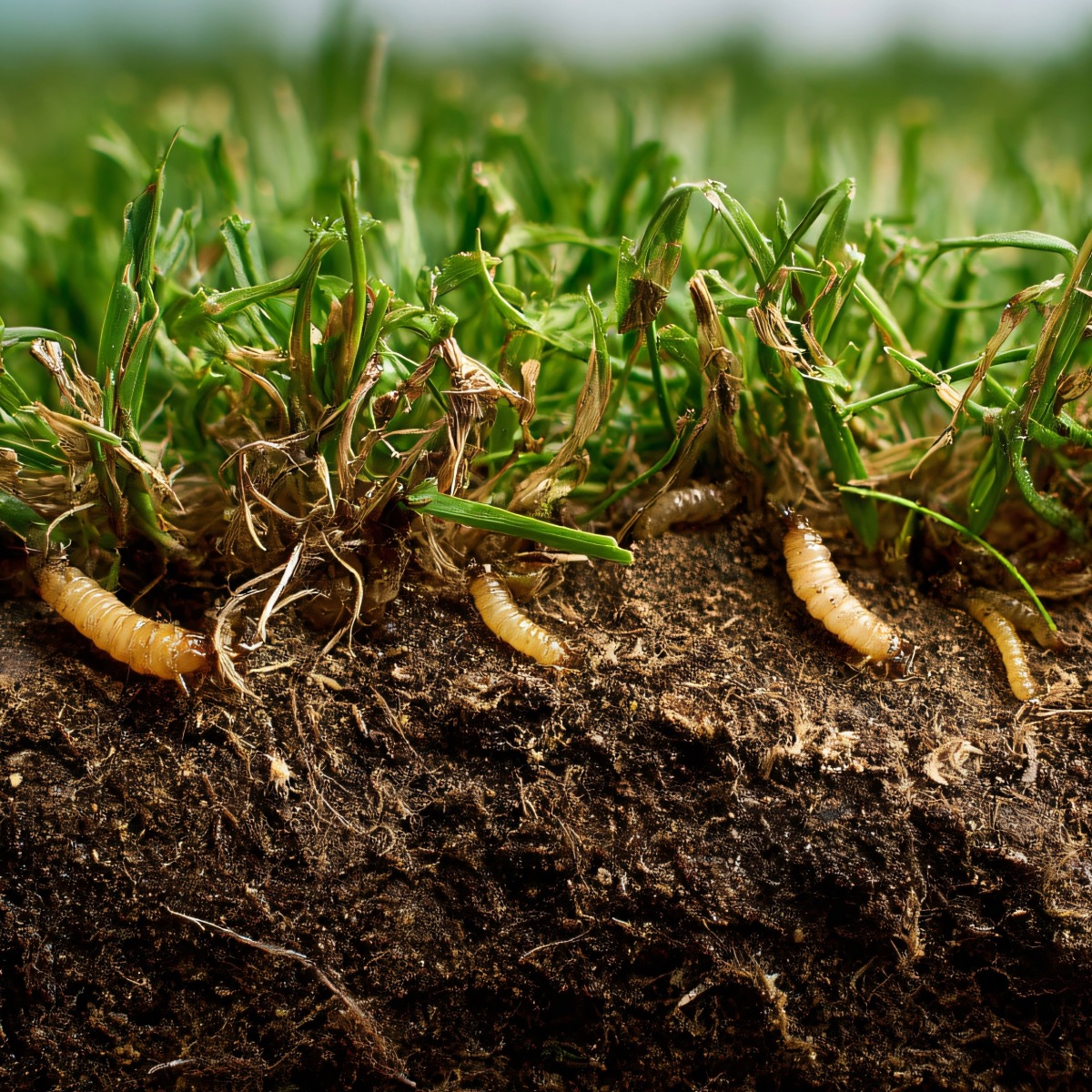
A healthy lawn in the Louisville and Southern Indiana region can change quickly once grubs become active beneath the surface. Grubs are one of the most common soil-dwelling lawn pests that can impact turf health during the growing season.
Grubs are the larval stage of several beetle species, including Japanese beetles, masked chafers, June beetles, and turfgrass ataenius. They live in the soil and feed on grass roots, which can reduce the plant’s ability to take up water and nutrients.
In this region, grub damage is often most noticeable in late summer through early fall, when turf is already under heat and moisture stress.
Signs of Grub Damage in Your Lawn
Grub activity is often not visible until turf damage begins to appear.
- Brown patches that may lift easily from the soil
- Spongy or weakened turf underfoot
- Increased digging activity from animals such as raccoons, skunks, or birds
- Sudden lawn decline during late summer
These symptoms typically appear after grubs have been feeding below the surface for an extended period.
How Grubs Damage Lawns
Grubs feed on grass roots, which can reduce the plant’s ability to absorb water and nutrients. As feeding continues, turf may thin, weaken, and eventually die in affected areas.
In some cases, damage is more severe in lawns that are already under stress from heat, drought, compacted soil, or poor drainage.
Common turf types in the region, including Kentucky bluegrass, tall fescue, perennial ryegrass, and fine fescue, can all be affected.
In some situations, irrigation can temporarily mask symptoms by keeping turf green while root damage continues below the surface.
Why Wildlife Damage in Your Lawn Can Indicate Grub Activity
When grubs are present in higher numbers, wildlife such as raccoons, skunks, and birds may dig in turf to feed on them. This can result in noticeable surface disruption.
While wildlife activity can have other causes, it is often associated with the presence of soil insects such as grubs in residential lawns.
Preventive vs. Curative Grub Control
Timing plays an important role in grub control. Results depend on applying the correct treatment at the appropriate stage of the insect’s life cycle. Black Diamond Turf Maintenance uses targeted applications based on regional timing, soil temperature, and pest development stage. This approach is focused on protecting the root system before damage begins or stopping active feeding as quickly as possible once detected.
Preventive Treatment (Late Spring – Early Summer)
Preventive treatments are typically applied before eggs hatch, generally in late spring through early summer in this region (approximately May through July).
When properly timed, these treatments aim to reduce the likelihood of grub establishment in the soil.
Curative Treatment (Late Summer – Early Fall)
Curative treatments are used when grubs are already present and actively feeding, typically in late summer through early fall (August through September).
At this stage, effectiveness depends on proper timing and application conditions, since grubs are already established in the root zone.
Black Diamond Turf Maintenance prioritizes stopping ongoing root damage and stabilizing turf, so recovery can take hold.
Benefits of Professional Grub Control with Black Diamond
Professional grub control programs focus on correct timing, application method, and coverage based on seasonal and local conditions.
- Reduced risk of turf damage from grub activity
- Improved overall lawn consistency and appearance
- Better alignment with seasonal pest cycles
- Support for long-term turf health and recovery
- Reduced likelihood of repeated seasonal damage
Lawn Recovery and Long-Term Protection
Recovery from grub damage depends on how severely the root system has been affected and how quickly treatment begins.
In some cases, overseeding or renovation may be necessary to restore damaged areas.
Long-term turf health is supported through proper mowing practices, watering habits, and soil management, which can help improve resilience over time.
Maintaining healthy turf conditions may also reduce the likelihood of severe future damage.
Schedule a Lawn Inspection
Think your lawn may have grubs? Black Diamond Turf Maintenance can inspect your lawn, confirm the issue, and recommend the right treatment before damage gets worse.
Schedule your grub inspection now before late-summer damage spreads and becomes costly to repair.