
When fall arrives in Louisville and Southern Indiana, lawn care may not be the first thing on your mind. The mowing season is slowing down, leaves are beginning to fall, and your grass may look like it’s ready for a break.
But underneath the surface, your lawn is still hard at work.
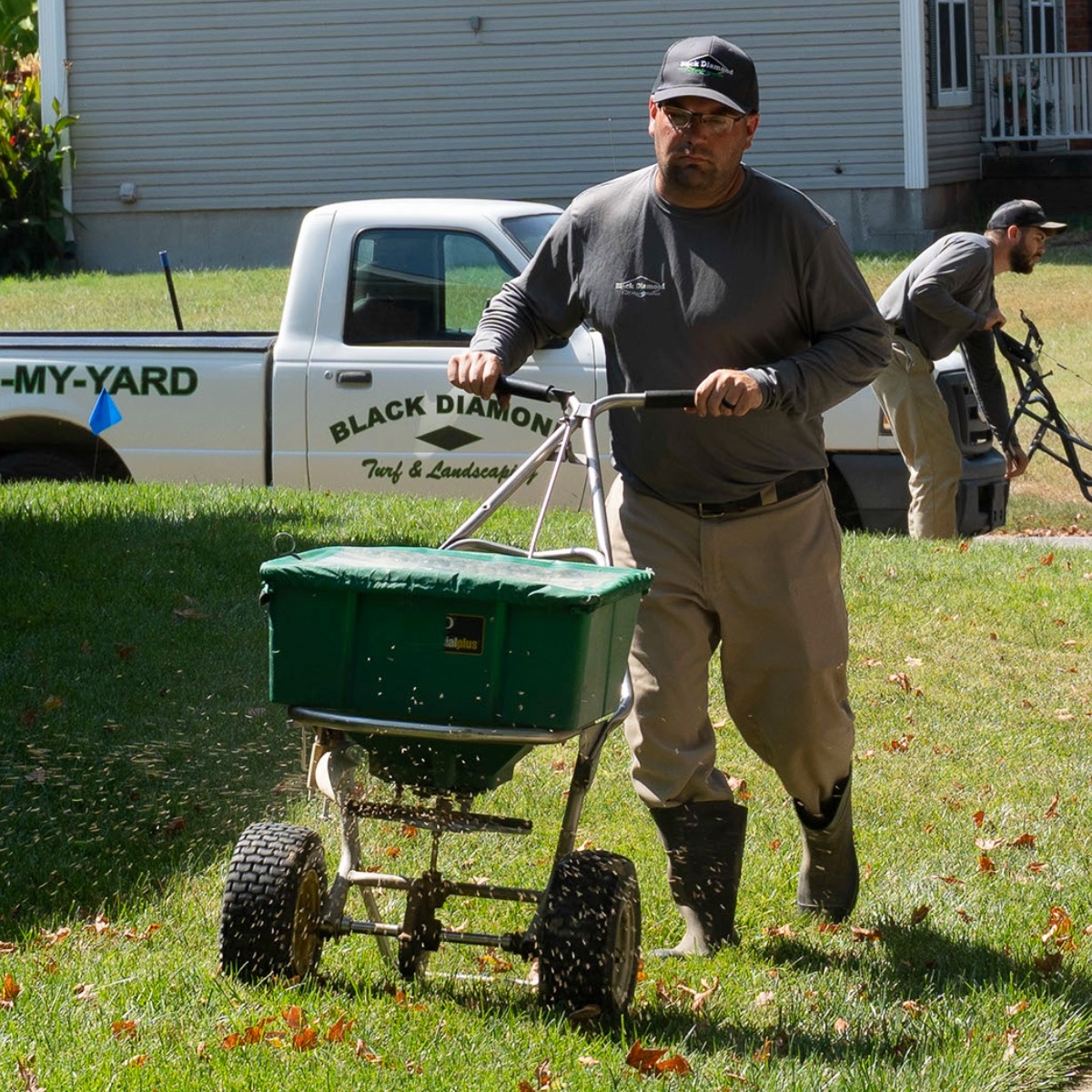
Fall fertilization is one of the most important steps you can take to help create a thicker, healthier, greener lawn next spring. Feeding your lawn in the fall helps strengthen roots, replenish nutrients lost during summer, and prepare cool-season grasses for winter and spring growth.
Why Is Fall Fertilization Important in Louisville and Southern Indiana?
Lawns in Louisville, Kentucky, and Southern Indiana deal with everything from hot, humid summers and periods of drought to heavy rainfall and changing fall temperatures. By the end of summer, even a well-maintained lawn can be stressed.
Fortunately, fall brings cooler temperatures that are ideal for many of the cool-season grasses common throughout Kentuckiana, including tall fescue and Kentucky bluegrass.
While grass growth above ground begins to slow as temperatures drop, the root system remains active. Fall lawn fertilization provides nutrients that help grass strengthen its roots and store energy before winter.
Think of it as feeding your lawn now, so it has something in the tank when spring arrives.
What Does Fall Fertilizer Do for Your Lawn?
Properly timed fall fertilization can benefit your lawn in several ways:
- Strengthens the root system: Stronger roots help grass better withstand heat, drought, foot traffic, and other stresses.
- Helps repair summer damage: Lawn fertilization provides nutrients that support recovery after hot and dry summer conditions.
- Encourages thicker turf: Healthy, dense grass can make it more difficult for weeds to compete for space.
- Supports spring green-up: A lawn that enters winter healthy and well-fed is better prepared to begin growing when temperatures warm.
- Improves long-term lawn health: Consistent, seasonally appropriate fertilization helps create a stronger and more resilient lawn.
One of the best green lawn tips is to pay attention to what’s happening below the surface. A beautiful lawn starts with a healthy root system.
When Should You Fertilize Your Lawn in the Fall?
For cool-season lawns in Louisville and Southern Indiana, fall is one of the most important fertilization periods of the year.
The goal isn’t simply to make your grass greener for a few more weeks. Fall feeding is about supporting the root system and preparing your lawn for winter and the following growing season.
However, there isn’t one perfect date to fertilize your lawn in fall. Grass type, soil conditions, weather, previous treatments, and the overall health of your lawn can all influence the best timing and nutrient balance.
That’s why a professional lawn fertilization program can make a difference. Applying the wrong fertilizer, applying too much, or treating at the wrong time may prevent you from getting the results you want.
Fall Lawn Care Is About More Than Fertilizer
Fertilizer is important, but it’s only one part of building a healthy lawn.
Your grass also needs soil conditions that allow its roots to absorb water and nutrients effectively. Compacted soil or an improper soil pH can make it more difficult for your lawn to take advantage of the nutrients you’re providing.
Depending on the condition of your lawn, fall can also be an excellent time for aeration and overseeding. Aeration helps relieve soil compaction and allows air, water, and nutrients to better reach the root zone. Overseeding can help fill thin or bare areas with new grass.
A lime application may also be recommended when soil is too acidic. Correcting soil pH can improve nutrient availability and create better growing conditions for your grass.
Together, these treatments can help create the foundation for a thicker, healthier lawn.
Local Lawn Care Expertise Makes a Difference
Lawns in Louisville and Southern Indiana have specific needs. Our hot summers, changing fall temperatures, local soil conditions, and cool-season turf varieties mean a one-size-fits-all lawn program isn’t always the best approach.
At Black Diamond Turf Maintenance, we build lawn treatment programs around the needs of local lawns.
Our professional lawn fertilization services provide seasonally appropriate nutrients designed to strengthen grass, support healthy root development, and improve your lawn throughout the year.
Whether you’re dealing with thin grass, weeds, summer stress, or simply want a greener lawn next year, fall is the time to start preparing.
A Greener Spring Starts This Fall
Don’t wait until spring to start thinking about your lawn.
What you do in the fall can have a major impact on how your grass responds when warmer weather returns. Proper fertilization, healthy soil, and strong roots can give your lawn the foundation it needs for the next growing season.
Black Diamond Turf Maintenance proudly provides professional lawn care and fertilization services throughout Louisville, Kentucky, Jeffersonville, New Albany, Southern Indiana, and surrounding Kentuckiana communities.
Ready to give your lawn a head start on next spring? Contact Black Diamond Turf Maintenance today for a free estimate.